Standard sodalite does not glow naturally in darkness; its fluorescent properties activate specifically under ultraviolet (UV) light. While non-fluorescent varieties appear inert, specimens containing specific minerals like hackmanite or originating from locations such as Greenland emit orange-to-reddish orange light when exposed to UV wavelengths. This reaction varies significantly based on geological composition and light spectrum used.

When selecting mineral specimens online or at gem shows, collectors often notice discrepancies in product descriptions. After examining a deep blue stone labeled as sodalite, you might wonder whether claims about its glowing properties refer to natural characteristics or artificial treatments. Confusion arises because visual documentation shared on platforms sometimes exaggerates glow intensity through photographic manipulation or fails to disclose UV requirements. The importance of scientific clarity becomes evident when choosing between specimens: misidentification can occur between inert sodalite and its rare fluorescent forms like hackmanite, while improperly marketed artificial enhancements may disappoint those seeking authentic geological features.
Many inquire whether all sodalite glows naturally when the lights dim, only to discover UV light is necessary. This foundational knowledge prevents misinterpretation of sodalite's inherent properties. When exposed to specific ultraviolet wavelengths between 365nm and 395nm, electrons in sulfur-containing sites absorb energy and temporarily jump to higher orbitals before releasing visible photons upon returning to resting states.
This fluorescence phenomenon differs significantly between natural and synthetic material. In geological specimens, sulfur impurities from surrounding syenite formations create activation centers, resulting in patchy glow patterns that follow crystalline boundaries. By contrast, lab-created versions may demonstrate uniform illumination across their structure due to controlled composition during synthesis. Additionally, trace elements determine spectrum response intensity, meaning one deposit's stones may visually outshine others under identical lighting conditions. For collectors, recognizing these nuances explains why seemingly identical stones exhibit different UV reactions.
While testing sodalite reactions under UV light, timing distinguishes fluorescence from phosphorescence. Fluorescence ceases immediately when the light source turns off, observable in many mineral specimens. With phosphorescence—detected in certain sodalites—the luminance briefly continues for several seconds. This phenomenon occurs because electrons remain briefly trapped in metastable states before gradually releasing residual energy. Using timing instruments enables distinctions between varieties: specimens showing five-second-plus glow duration after UV removal indicate higher geological quality.
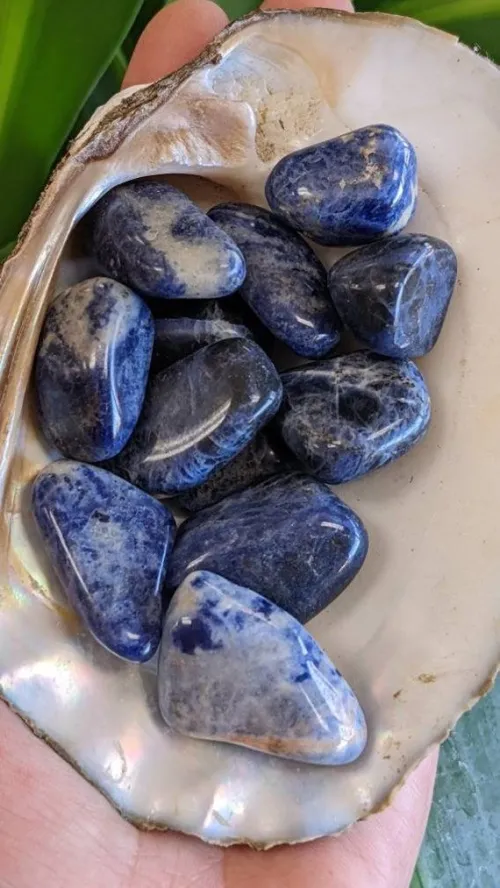
Collectors face challenges differentiating authentic fluorescent sodalite from treated alternatives. Three core identification principles help minimize misidentification. First, genuine fluorescence requires UV initiation rather than glowing in ambient darkness. Second, natural reactions create uneven zoning rather than broad homogeneous coloration. Finally, phosphorescence provides another layer of validation when consistently timed.
Several observational cues distinguish geological formation processes from synthetic modifications. For example, when white calcite veins cross blue sodalite, authentic samples display dark veins contrasting brightly lit mineral faces due to distinct compositions receiving photons differently. Similarly, examining surface light scatter patterns reveals differences between crystalline edges and polished planes: crystalline facets typically emit brighter radiance reflecting microscopic structural orientations. Collectors should compare seller photographs taken in natural lighting against UV images to judge whether vibrancy claims match material reality since cameras often misinterpret spectral outputs.
Differentiating between true fluorescence versus surface reflection requires proper lighting equipment. Short-wave versus long-wave ultraviolet lamps reveal material-specific responses based on energy absorption thresholds. Many minerals only react to particular segments across the UV spectrum, meaning using both devices helps interpret reactive characteristics more completely. For instance, testing under 254nm short-wave light might reveal reactions undetectable at 395nm long-wave frequencies.
The fluorescence intensity observed in sodalite directly correlates with specific geographic deposits and formation conditions. Not all mining locations yield stones showing equivalent UV reactions. For instance, specimens from syenite intrusions of Kangerlussuaq, Greenland exhibit strong responsiveness while varieties mined elsewhere might remain inactive due to differing mineral interactions. Evaluating these geographical links allows collectors to predict potential glow properties when purchase provenance documentation exists.
Beyond geographical signatures, geological mechanics contribute significantly to visual results. Sodalite formations experiencing intense pressure shifts often develop complex fracture lines containing trapped gases or fluids. Though generally invisible under normal lighting, these imperfections may fluoresce unexpectedly under UV wavelengths, creating striking linear patterns throughout otherwise homogenous material. Meanwhile, surrounding rocks exert compositional influence: proximity deposits rich in chkalovite or other rare minerals often enhance sulfur uptake during crystallization, intensifying subsequent visible emissions through synergistic mineral interplay.
Evaluating potential acquisitions requires structured approaches beyond aesthetic appreciation. Quality specimens strike balances between mineral integrity and reactivity, which may conflict in certain formations. Observing phosphorescence persistence beyond five seconds typically indicates stability desirable for serious collections. Meanwhile, choosing between rough crystals versus cut cabochons involves trade-offs: natural faces often exhibit more pronounced reactions than highly polished surfaces.
When assessing value indicators, consider consistency across verification methods. UV response alone cannot guarantee authenticity; cross-reference glow patterns with hardness confirmation tests. Using pocket hardness picks at Mohs scale level 5.5–6 reveals differences between authentic sodalite versus plastic resin or treated composites displaying similar UV signatures. Transaction protocols become important when purchasing without physical inspection: requesting unedited natural lighting photos from multiple angles helps spot dye applications not disclosed through filtered UV images alone. Also consider market nuances—while fluorescence generally signals rarer geological formation routes, its specific presence doesn't universally correlate with higher monetary value.
Accuracy demands precise environmental controls during assessments. Ambient lighting can obscure faint phosphorescence, so reliable detection requires total darkness following UV activation. Similarly, temperature affects electron behavior: warmer conditions extend phosphorescence duration, while material cooled significantly during testing may shorten visible persistence. Documenting testing metrics consistently enables comparative analysis over time as collections expand.
Before finalizing acquisitions, collectors benefit from focusing on three measurable attributes that align with their acquisition goals. First, establish geological provenance through supplier documentation to anticipate typical reactions. Second, prioritize UV testing parameters by using wavelengths between 365nm–395nm in controlled darkness. Finally, compare phosphorescence timing against reference minerals like willemite to gauge relative quality. Observing these material characteristics creates informed selection frameworks rather than relying solely on vendor descriptions or photographic evidence.
Q: Does sodalite glow without UV light?
A: No standard sodalite variety glows without UV exposure. Claims of self-luminescence typically reference phosphorescence—the temporary persistence of UV-induced emissions in some specimens after the UV light source turns off.
Q: What do orange fluorescence patterns indicate in sodalite?
A: Orange coloration typically originates from sulfur impurities within the crystal structure formed in specific geological environments like Greenland deposits. This emission range generally suggests authentic rather than treated mineral formation.
Q: Can synthetic sodalite fluoresce under ultraviolet light?
A: Lab-created versions can show UV responses but usually display unnatural color uniformity across surfaces. Testing phosphorescence duration and examining zoning variations under magnification help distinguish natural specimens.
Q: Why does only some blue sodalite glow under UV conditions?
A: Fluorescence activation depends critically on mineral composition differences between deposits and presence of minerals like hackmanite. Inert specimens may lack sulfur impurities necessary for photon emission pathways.
Q: How might geological factors affect sodalite phosphorescence duration?
A: Longer phosphorescence (over 5 seconds) generally links to geological stability allowing electron trapping pathways. Specimens from metamorphic zones featuring repeated pressure cycles may develop extended luminescence.


$
